
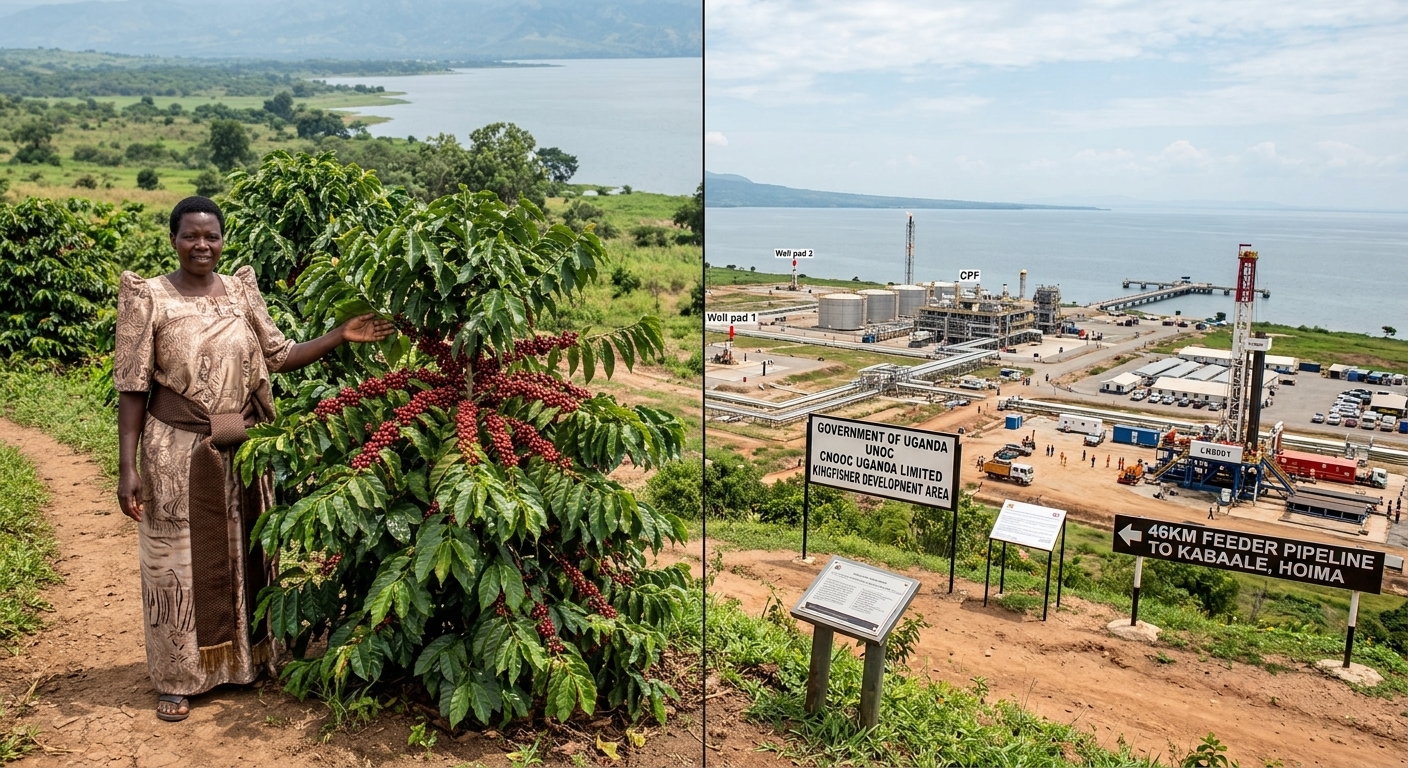
Uganda’s economy is approaching its biggest test in a generation. With commercial oil production nearing and coffee exports at record highs, the country’s growth story is shifting from promise to delivery.
Speaking at an Equity Bank Uganda trade and investment webinar on Wednesday, economist Stella Otieno laid out the numbers behind the optimism: growth above six percent for three straight financial years, inflation under four percent, and a Central Bank Rate that has held steady at 9.75 percent since October 2024.
“Growth has been above six percent for the previous three years. Inflation has been stable and under four percent within the target, and we also have stable policy rates,” Otieno said.
The session preceded Equity Bank’s third Trade Mission in Uganda, running September 13–16 in Kampala, which will bring together global, regional and local investors around agriculture, coffee, extractives, manufacturing, services and tourism.
The Oil Catalyst
Real GDP growth reached roughly six percent in the 2025/26 financial year, Otieno said, with inflation at four percent in July, below the medium-term target of five percent. Foreign exchange reserves have more than doubled, climbing from about $3.3 billion in January 2025 to $6.7 billion by June 2026.
That reserve build-up matters: it signals to investors that Uganda can absorb currency shocks as oil-related capital flows increase. Otieno projects growth could accelerate to eight or ten percent in 2026/27 once oil production begins, potentially the country’s first double-digit year.
The fiscal picture is less clean. The budget deficit stood at an estimated 7.1 percent of GDP at the end of 2025/26, and the current account deficit sits at 6.5 percent, driven largely by oil- and infrastructure-related imports. Otieno expects both to ease once oil revenues and export earnings start flowing in 2026/27.
Coffee’s Moment
Oil isn’t the only story. Uganda became Africa’s largest coffee exporter in 2025, and coffee export earnings hit $2.2 billion in the twelve months to June 2026, putting coffee alongside gold as one of the country’s top two foreign exchange earners.
The opportunity, Otieno said, no longer stops at the farm gate. Processing, logistics and export infrastructure all represent unclaimed value in a chain that has historically shipped Uganda’s coffee out raw.
What Investors Actually Need
Strong macro indicators alone don’t close deals, according to Catherine Psomgen, Director of Public Sector and Social Investments at Equity Bank. Investors also need reliable information, supportive policy, financing, and local partners who understand what they’re trying to build.
“At Equity Bank, we see our role as extending beyond traditional banking,” Psomgen said, describing the bank’s role in connecting investors to finance, markets, technology and strategic relationships across Equity Group’s footprint in multiple African markets, positioning Uganda as a gateway into the wider East and Central African region.
Rita Nabateregga, Deputy Director for Investment Promotion at the Uganda Investment Authority, said Uganda is entering a phase where the question is no longer what resources it has, but what businesses can be built around them spanning agriculture, agro-processing, manufacturing, logistics, energy, minerals, infrastructure, tourism, services and technology.
The harder task, she said, is converting that investment into jobs and enterprises that outlast the initial capital inflow.
Equity Bank’s read on the moment: Uganda’s growth story has moved past projections. What happens next depends on how well capital, technology and partnerships are deployed, turning resources and a growing market into businesses that last.